
Black Swan Tattoo Company Updates & Information
Straightforward content for the tattoo enthusiast
Tattoo Sleeve Styles: Full Coverage, Blackwork & Open Skin Concepts
Considering a Custom Sleeve in Austin?
At Black Swan Tattoo Company, Jason works privately with collectors in Austin, Texas to design large-scale sleeves with long-term structure and cohesion in mind. Whether planning a Japanese composition, a fine line sleeve with open skin, or a traditional patchwork layout, each project is approached as a complete architectural study rather than a collection of individual tattoos.
A tattoo sleeve is a long-term composition that lives on the body as a complete visual statement. For serious collectors, the question is rarely what should I get? It becomes how should it flow with my body?
Coverage, background, flow, and negative space all influence how a sleeve reads from a distance, how it moves with the arm, and how it ages over time. Some sleeves are fully saturated and unified by background. Others rely on open skin as part of the composition. Some are built in one cohesive vision, while others evolve gradually.
If you’re researching different types of tattoo sleeves — whether considering Japanese work, fine line, traditional patchwork, or blackwork — understanding structure is the first step toward making an informed decision.
Below is a breakdown of the most common sleeve formats and how they differ in both aesthetic and execution.
Japanese-Style Sleeves with Chest Plate Integration
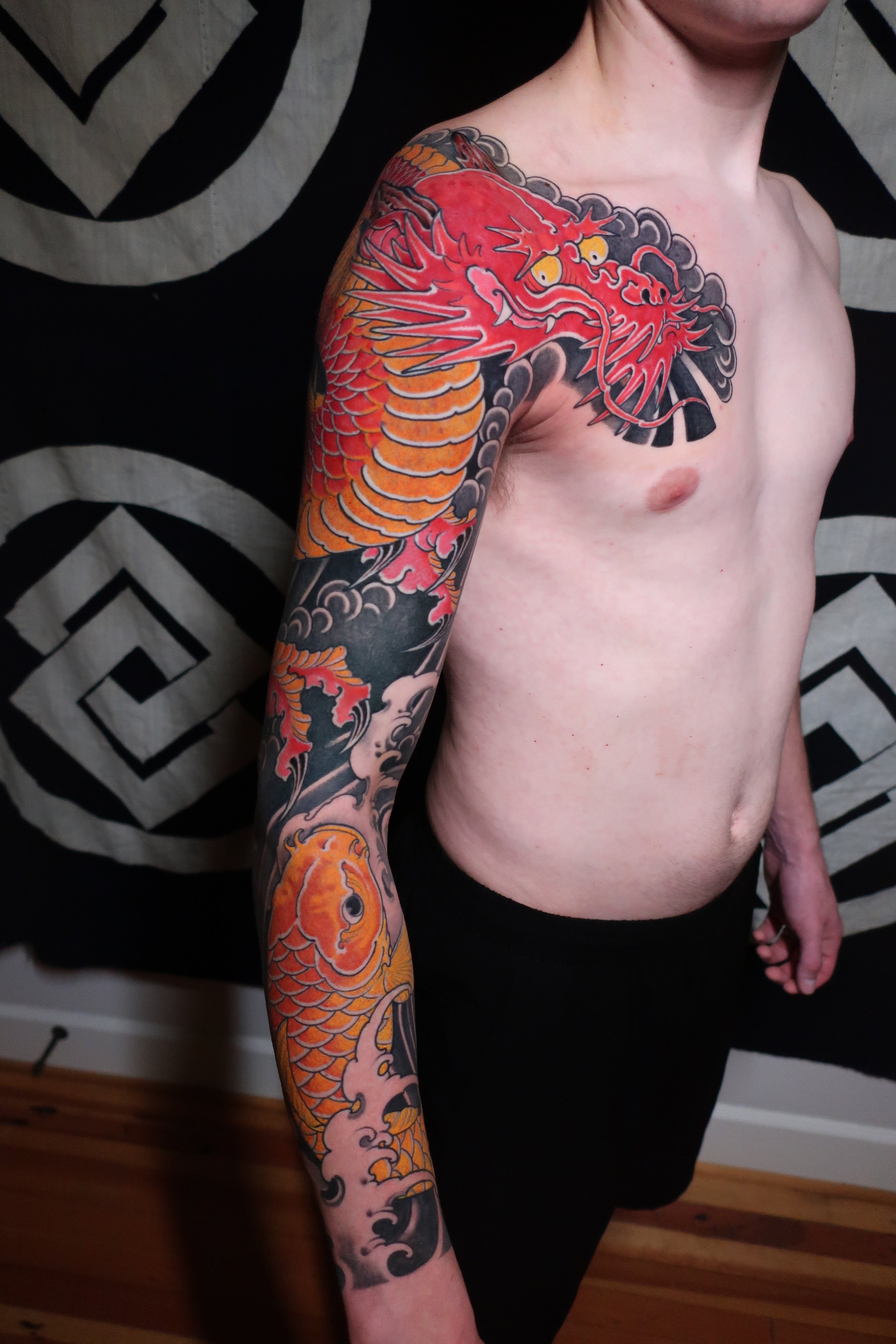
Japanese sleeves are designed as complete body panels rather than isolated arm tattoos. Background elements — wind bars, waves, smoke, florals — create flow from shoulder to wrist, allowing the imagery to move cohesively with the body.
When extended into a chest plate (often referred to as a hikae), the sleeve becomes part of a larger composition that frames the torso. This approach creates visual weight and continuity, especially when viewed from the front.
Because of their structure, Japanese sleeves require advance planning. They are not typically assembled piece by piece — they are composed as a unified design from the beginning.
This format is ideal for collectors who value tradition, saturation, and a sense of completion.
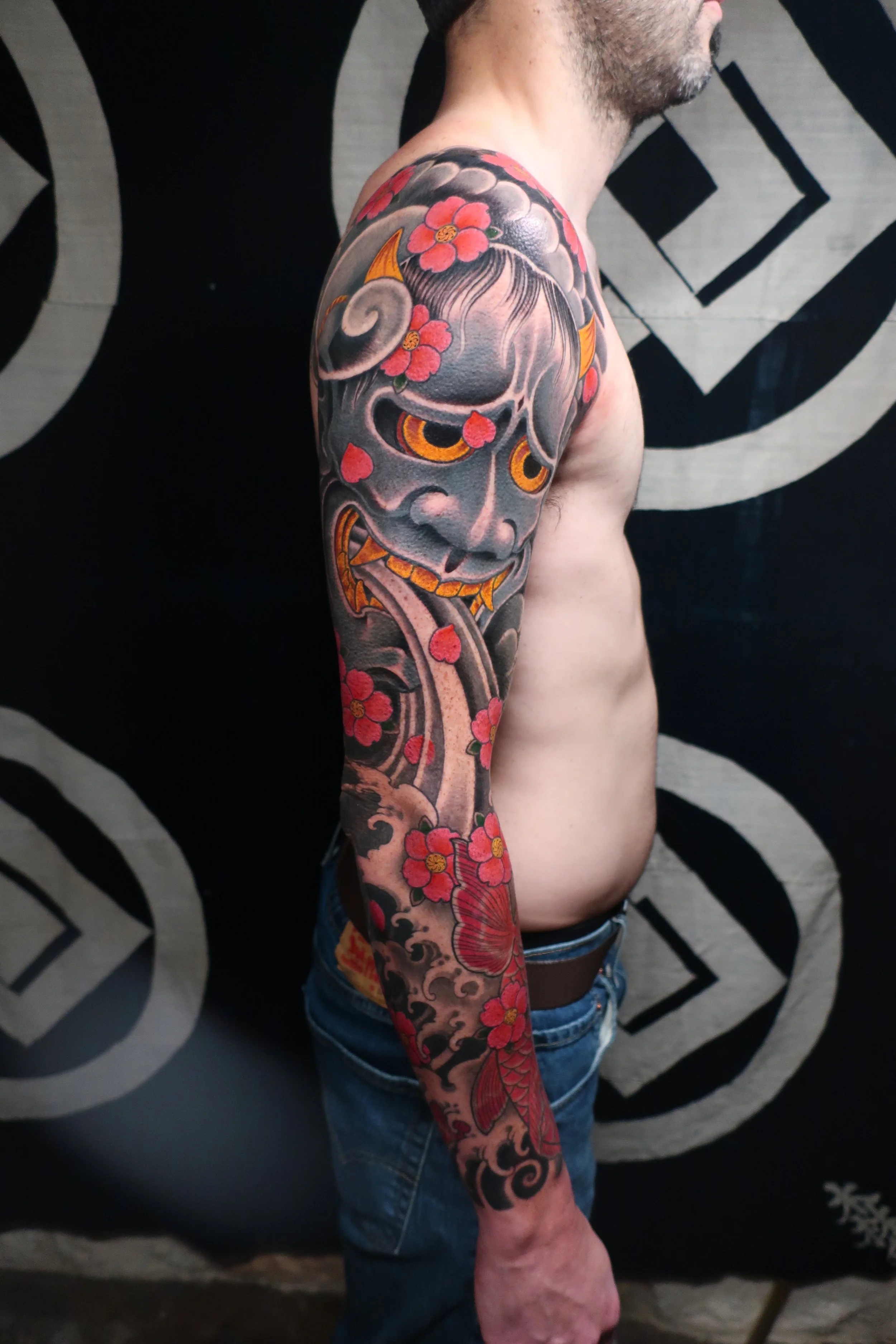
Full Japanese Sleeve Capped at the Shoulder
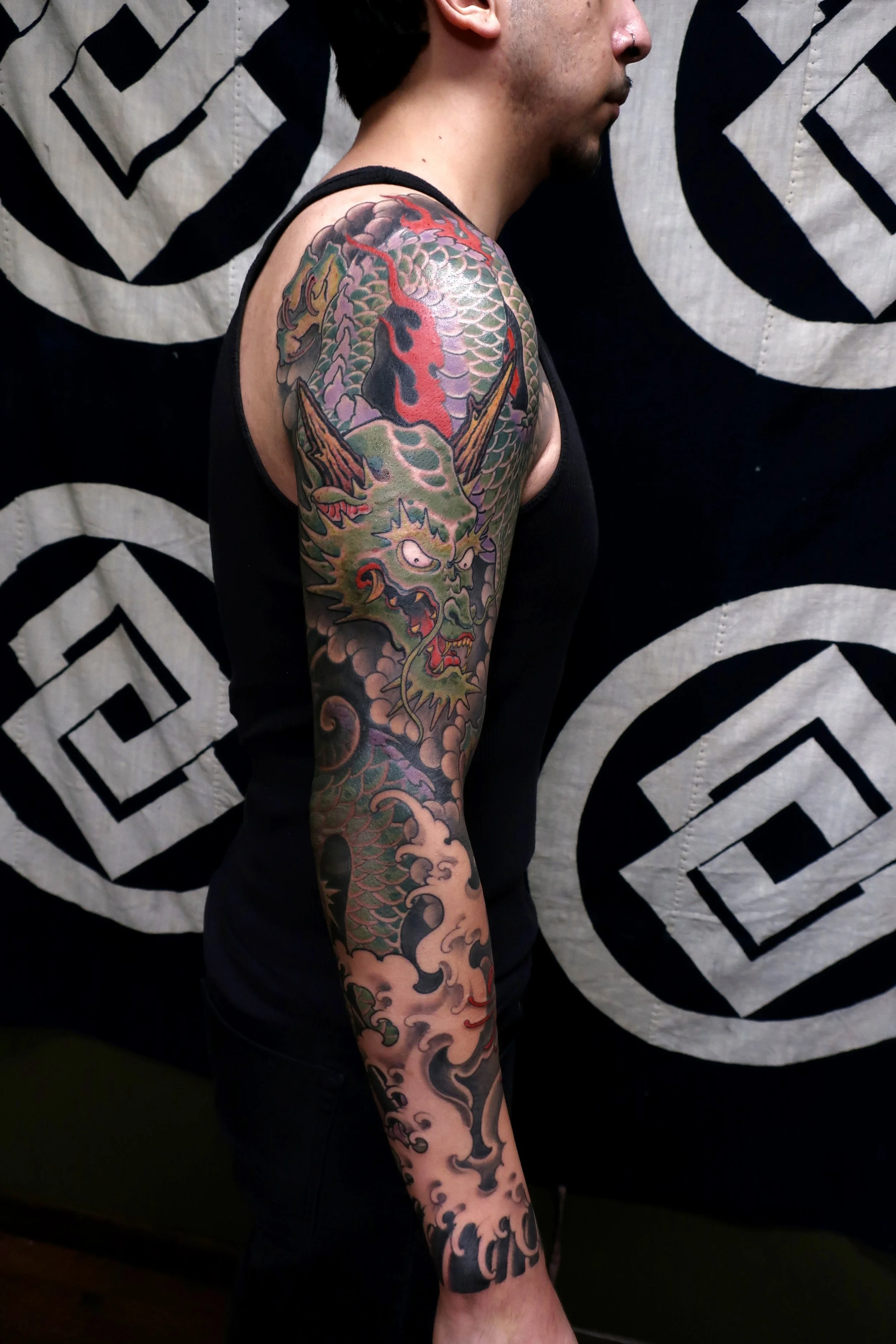
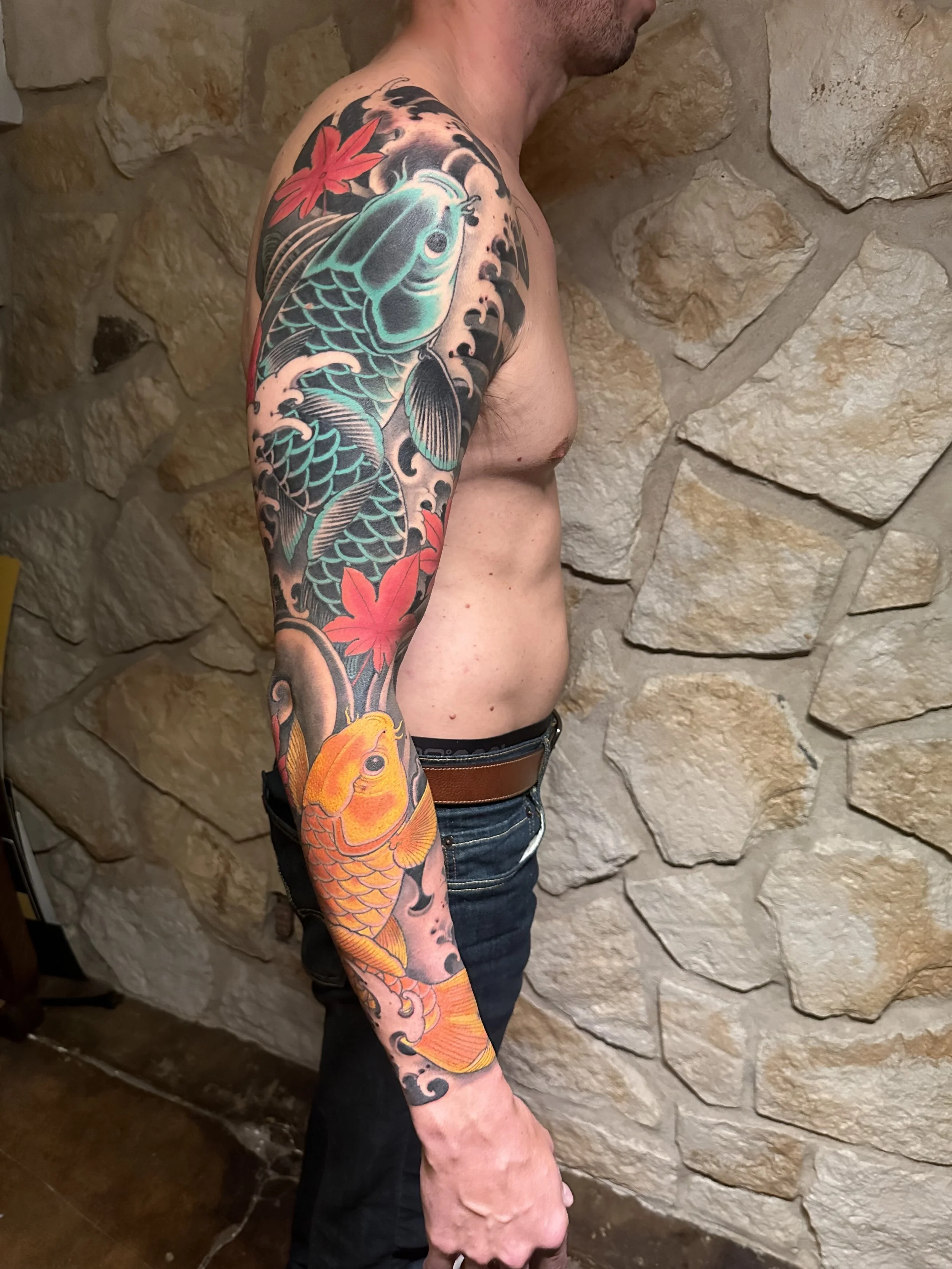
For those who want a complete arm composition without extending into the chest, a full Japanese sleeve capped at the shoulder offers contained impact.
The shoulder cap becomes the natural endpoint, creating a finished look that respects the body’s anatomy while maintaining density and flow through the arm. Background elements still unify the imagery, but the composition remains self-contained.
This option appeals to collectors who want commitment and cohesion without moving into larger torso work.
Fine Line Sleeves with Open Skin
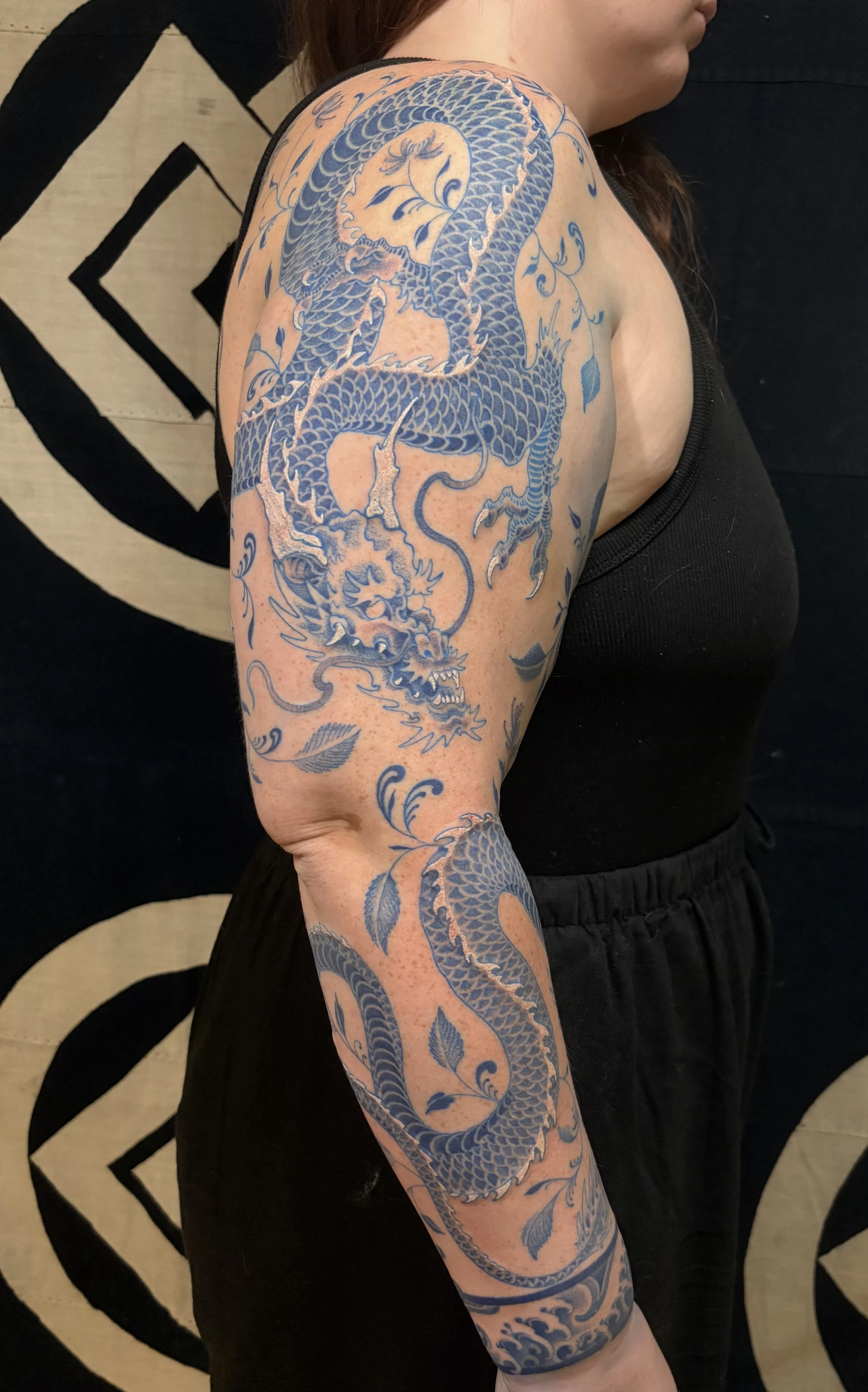
In contrast to fully saturated sleeves, fine line compositions often rely on negative space as part of the design. Skin is intentionally left visible, creating air between elements and allowing delicate linework to breathe.
This approach feels lighter and more restrained. Rather than using background to connect imagery, spacing and placement create rhythm.
Open skin sleeves require just as much planning as full coverage work — sometimes more. Without background to unify the arm, placement becomes critical. The balance between density and openness determines whether the sleeve feels intentional or unfinished.
For clients drawn to minimalism, subtlety, and refined detail, this format offers elegance without visual heaviness.
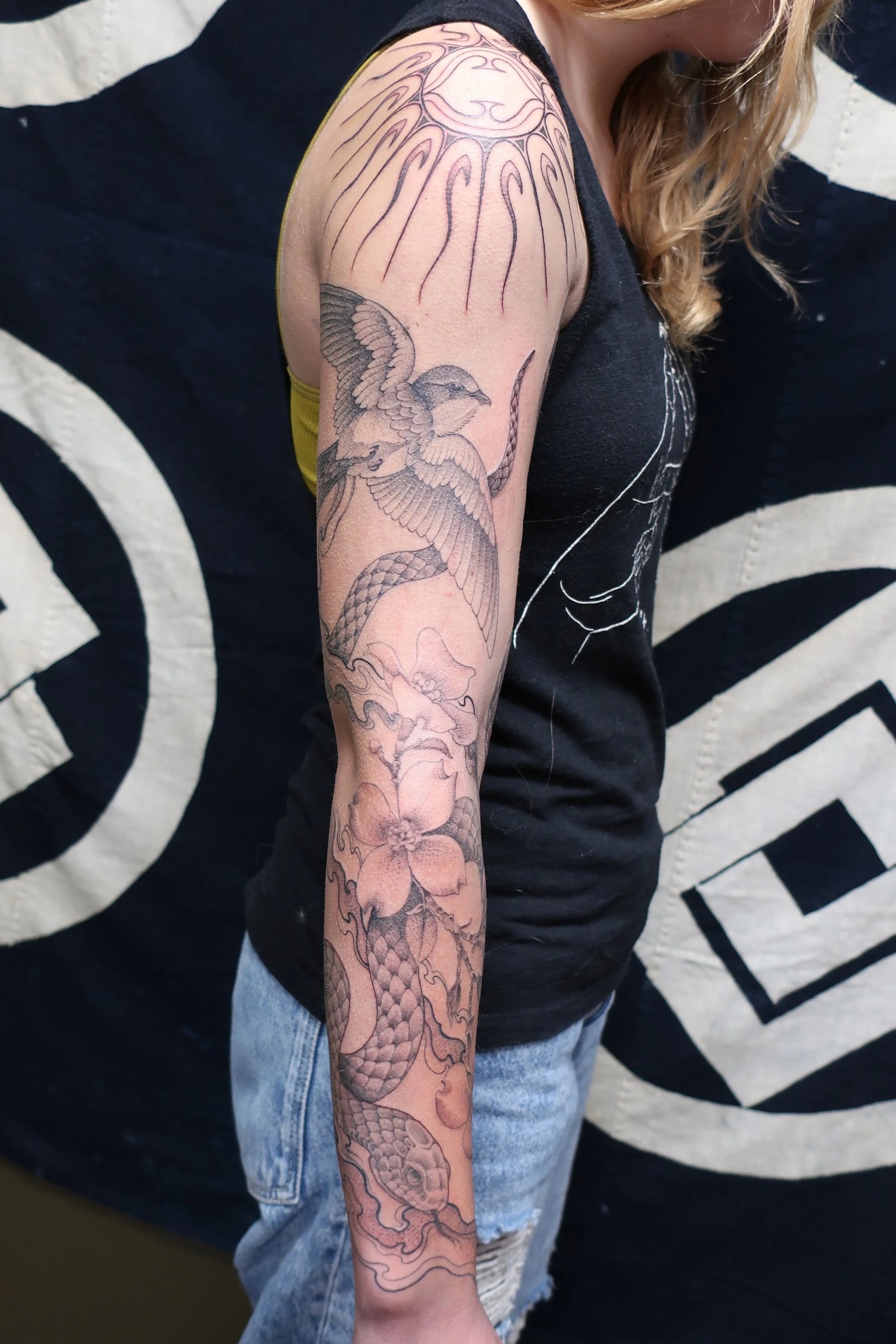
Upper Half Sleeve Capped at the Shoulder
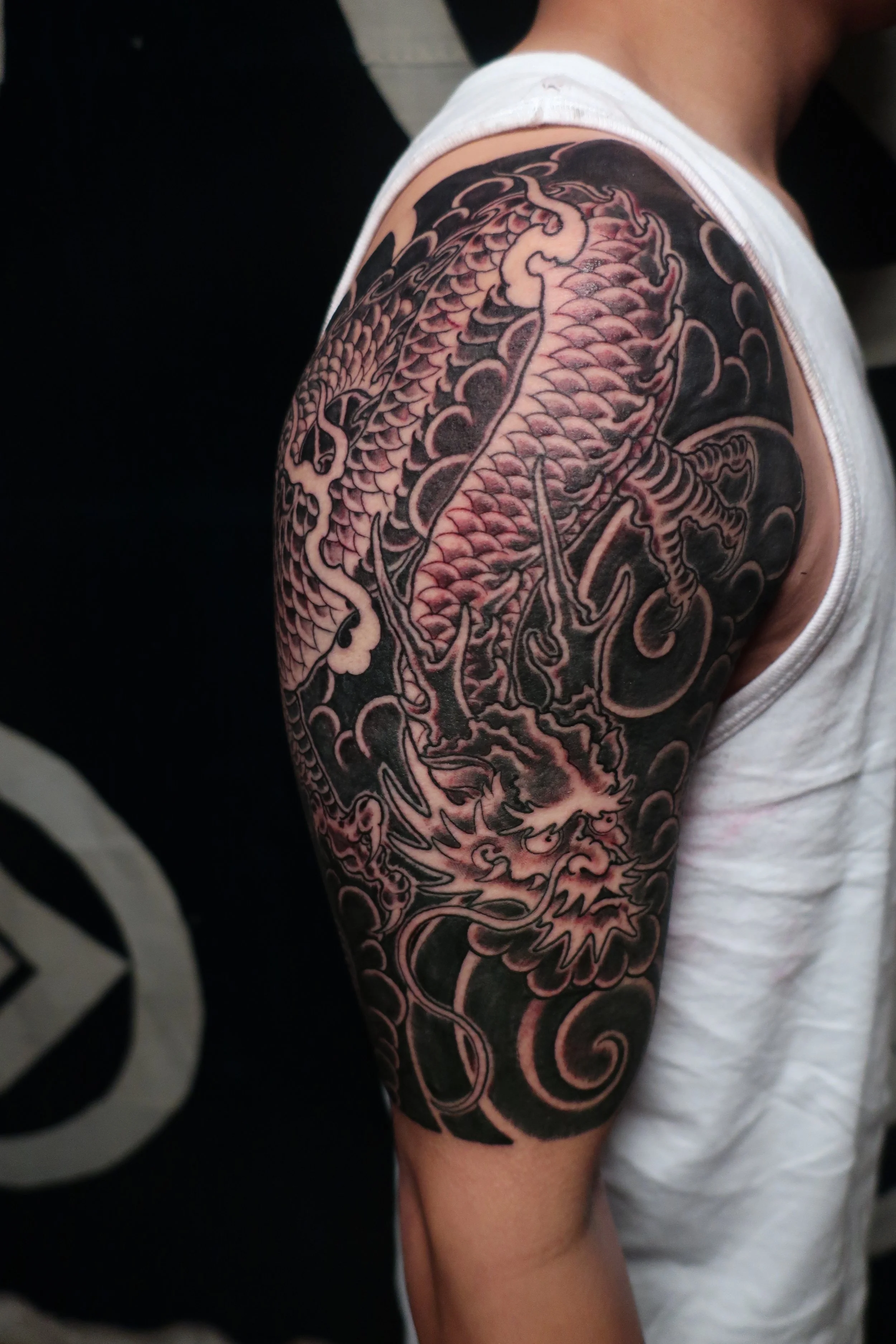
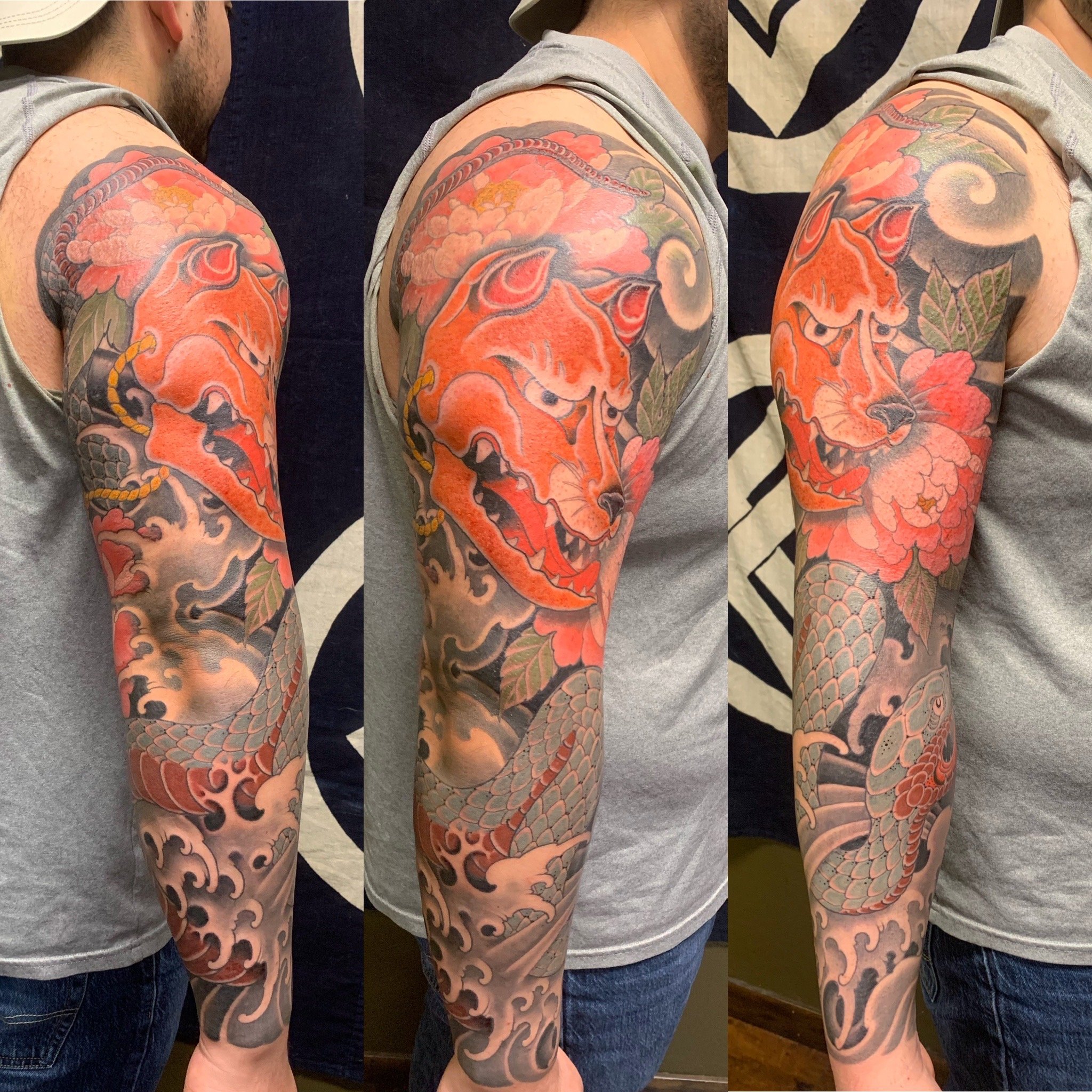
An upper half sleeve concentrates composition between the shoulder and elbow. When capped properly at the shoulder, the design feels anchored and complete rather than abruptly stopped.
This format allows for bold imagery and strong structure while preserving flexibility below the elbow. It can stand alone or serve as the first phase of a larger sleeve later.
Because the upper arm carries visual weight, this option often feels impactful even without full-arm coverage.
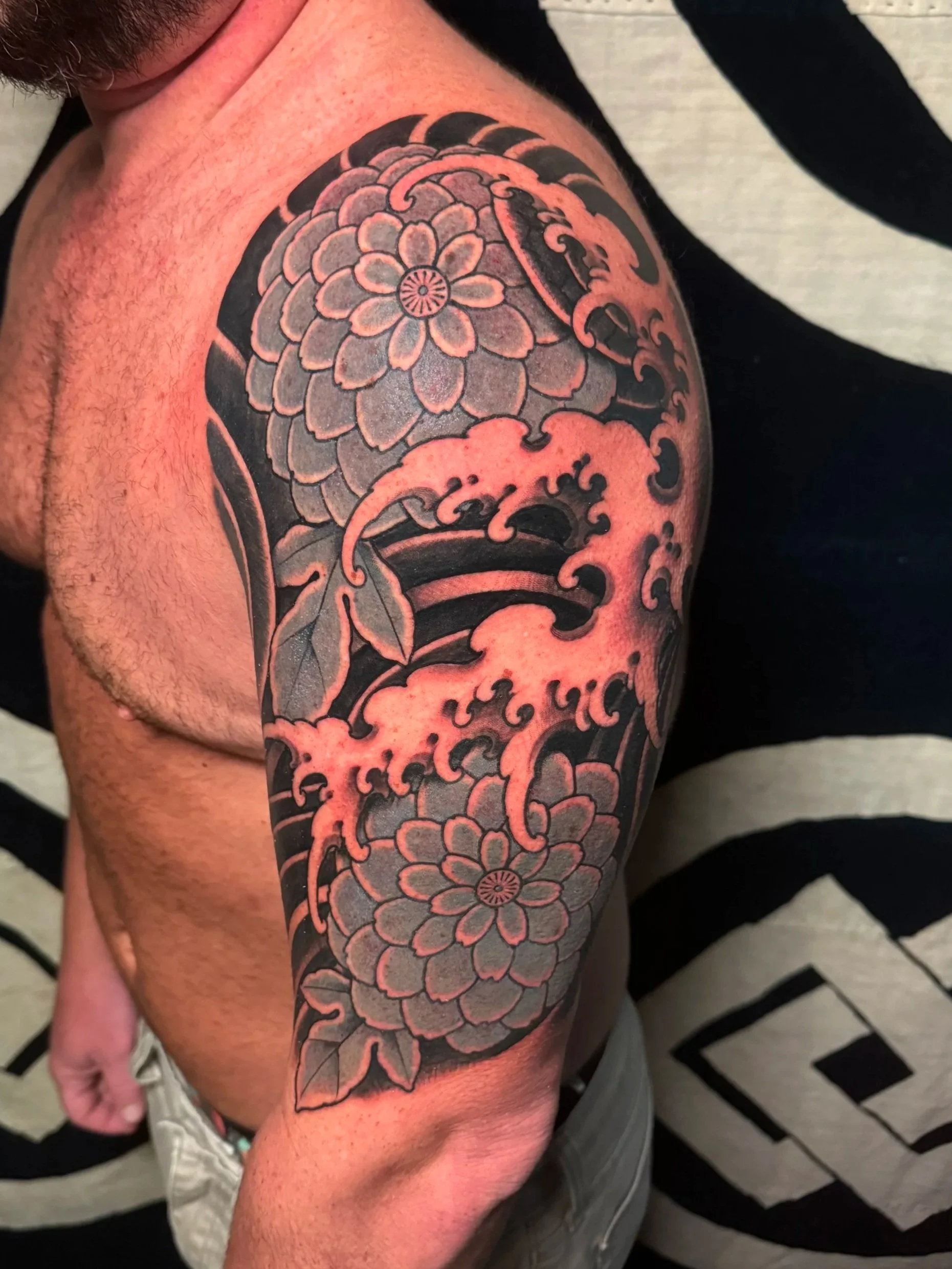
Lower Half Sleeve: Forearm-Focused Composition
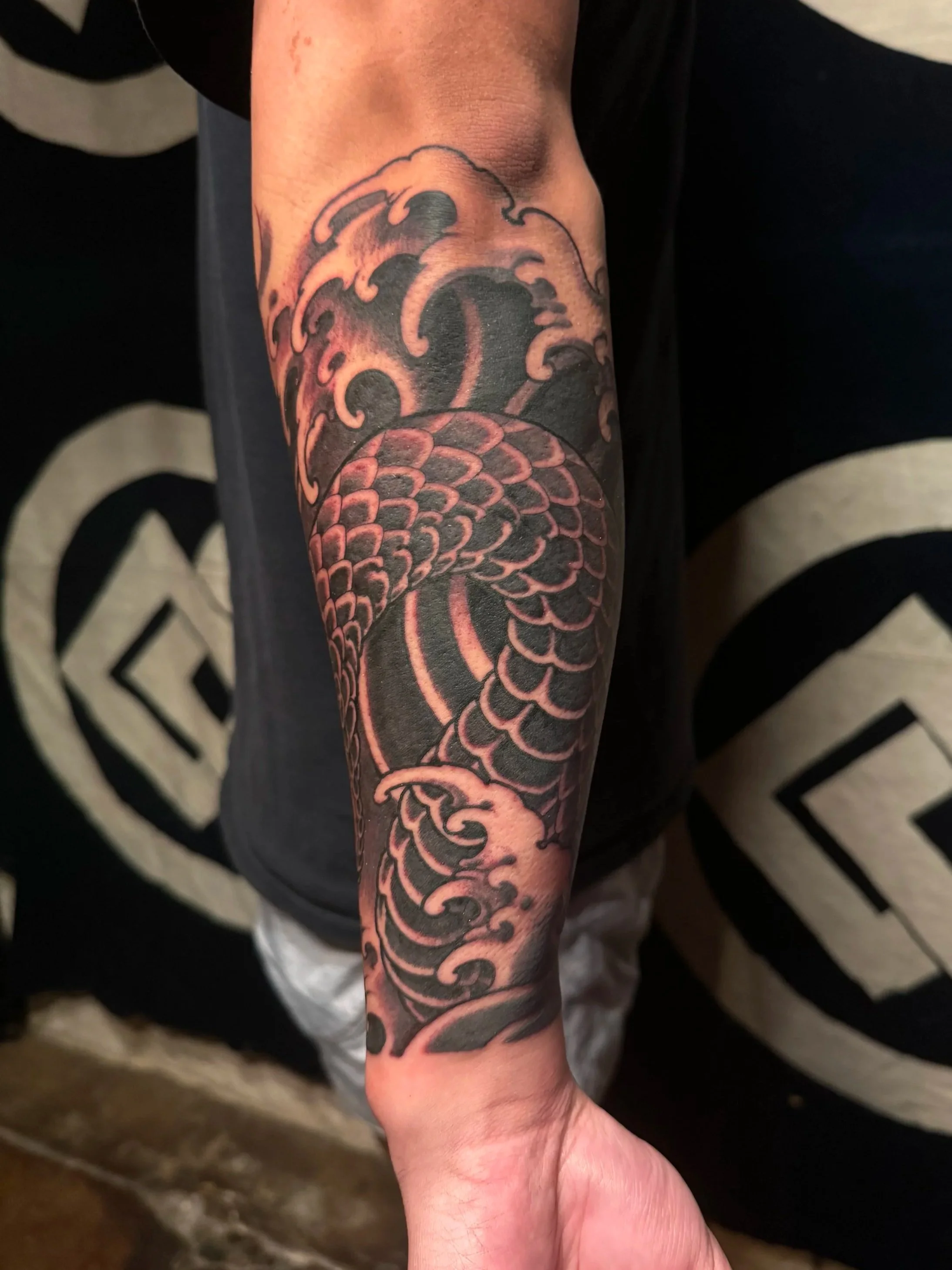
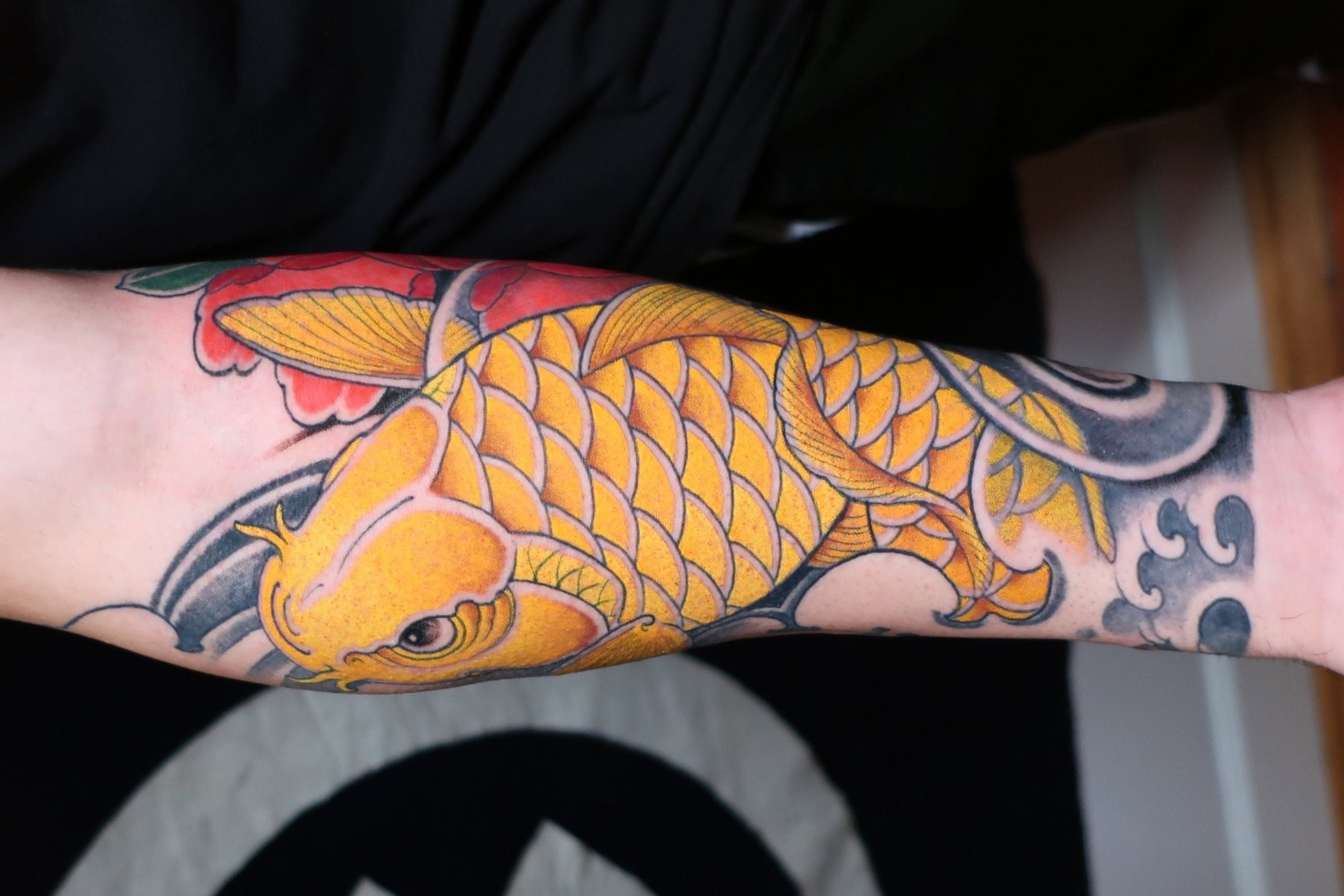
A lower sleeve centers attention on the forearm, typically ending at or just below the elbow. This format emphasizes visibility and detail, as the forearm is one of the most frequently seen areas of the body.
Stopping at the elbow creates a deliberate break in coverage. The contrast between tattooed forearm and open upper arm can feel striking and modern.
This structure works well for clients who want high visibility without committing to the upper arm or shoulder.
Three-Quarter Sleeve with Chest Plate Extension
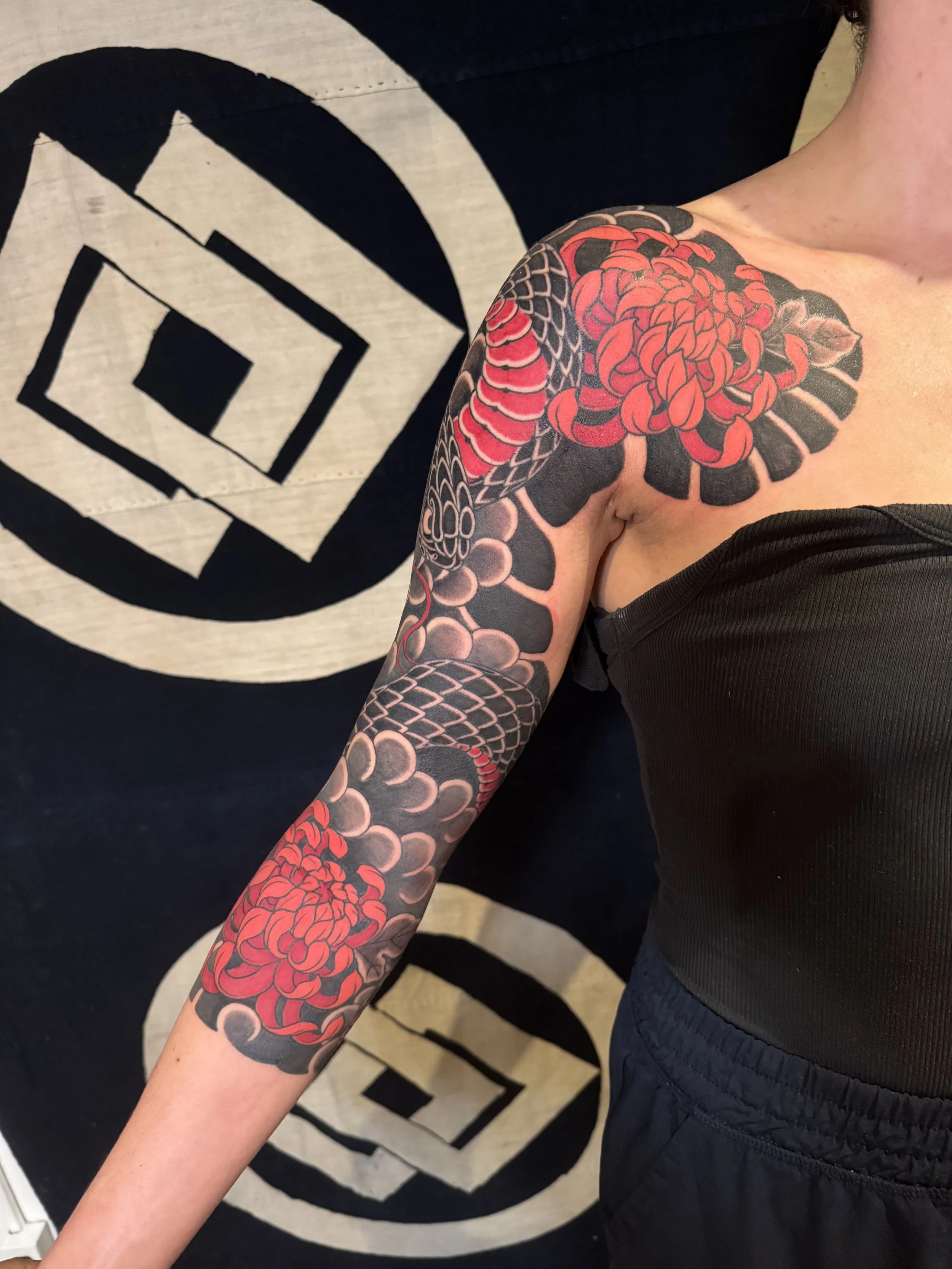
A three-quarter sleeve extends past the elbow but stops short of the wrist, sometimes paired with a chest plate for added balance.
This creates asymmetry and tension in a controlled way. The sleeve feels substantial without fully enclosing the arm.
For some collectors, this format offers a sense of completion while leaving room for future expansion if desired.
Traditional Patchwork Sleeves
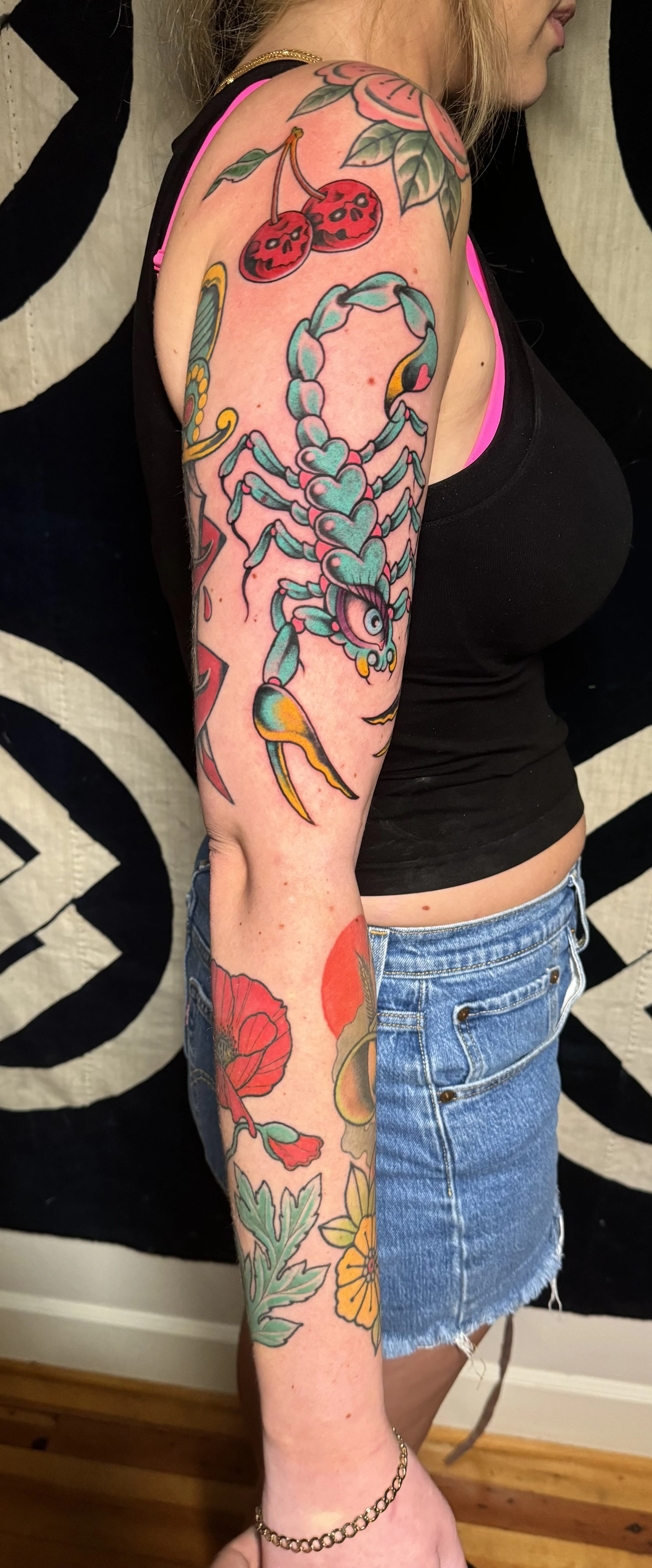
Unlike fully composed sleeves, patchwork builds gradually over time. Individual pieces are placed intentionally but not necessarily connected by continuous background.
Traditional imagery — bold lines, strong color, clear silhouettes — allows each tattoo to stand independently while contributing to an overall rhythm.
Some patchwork sleeves remain open between pieces. Others eventually incorporate background or filler to unify the arm.
This format appeals to collectors who enjoy the process of accumulation and evolution rather than a single master composition.
Blastover Half Sleeves
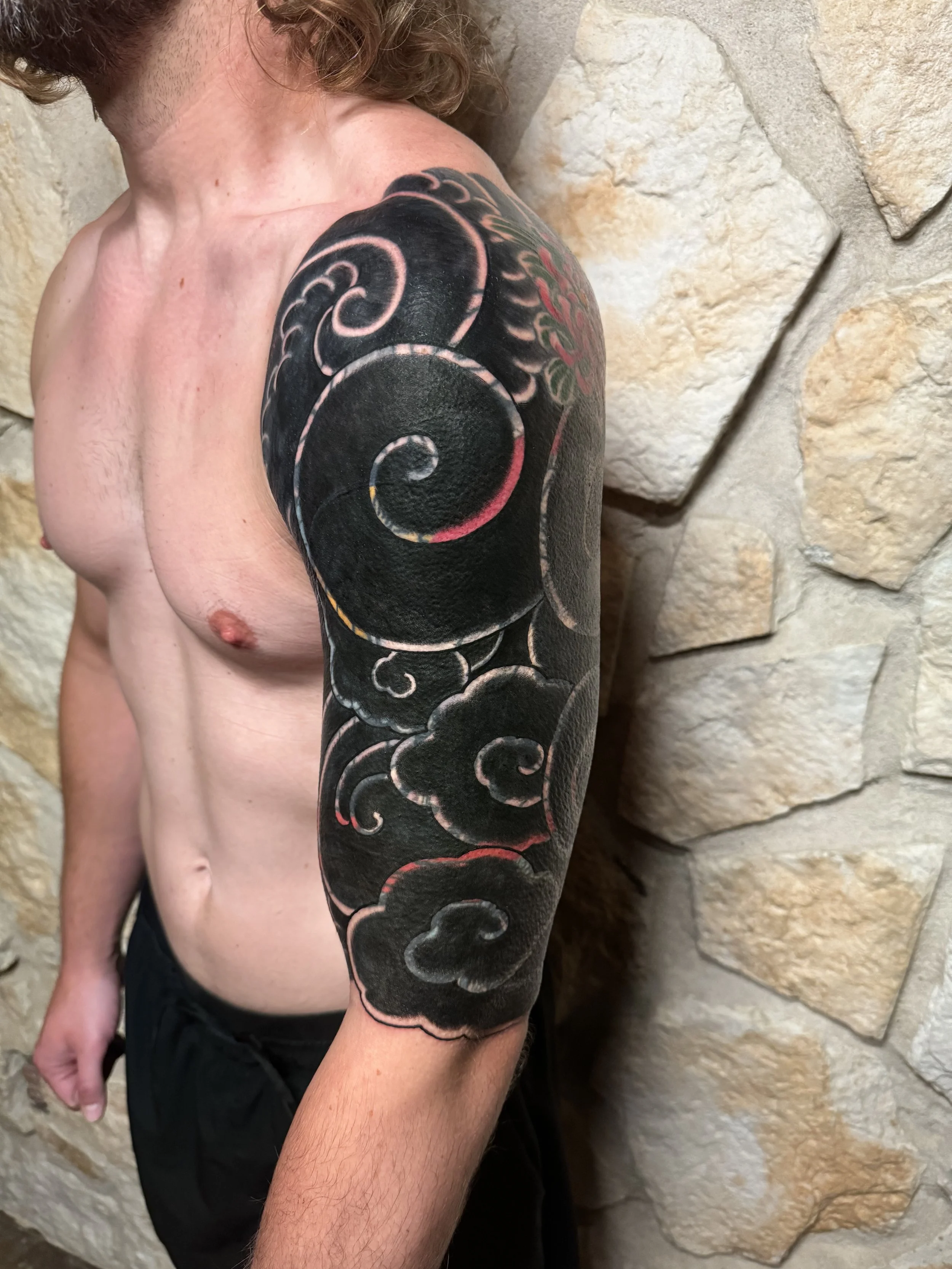
A blastover differs from a conventional cover-up. Rather than fully concealing existing work, new imagery is layered over previous tattoos, allowing portions of the original design to remain visible beneath.
When executed with restraint, this approach creates depth and texture. It transforms the arm into a layered surface rather than erasing its history.
Blastover sleeves require strong composition and confidence in contrast. Without careful planning, layering can feel cluttered. With discipline, it becomes intentional and dimensional.
Blackwork Background Sleeves
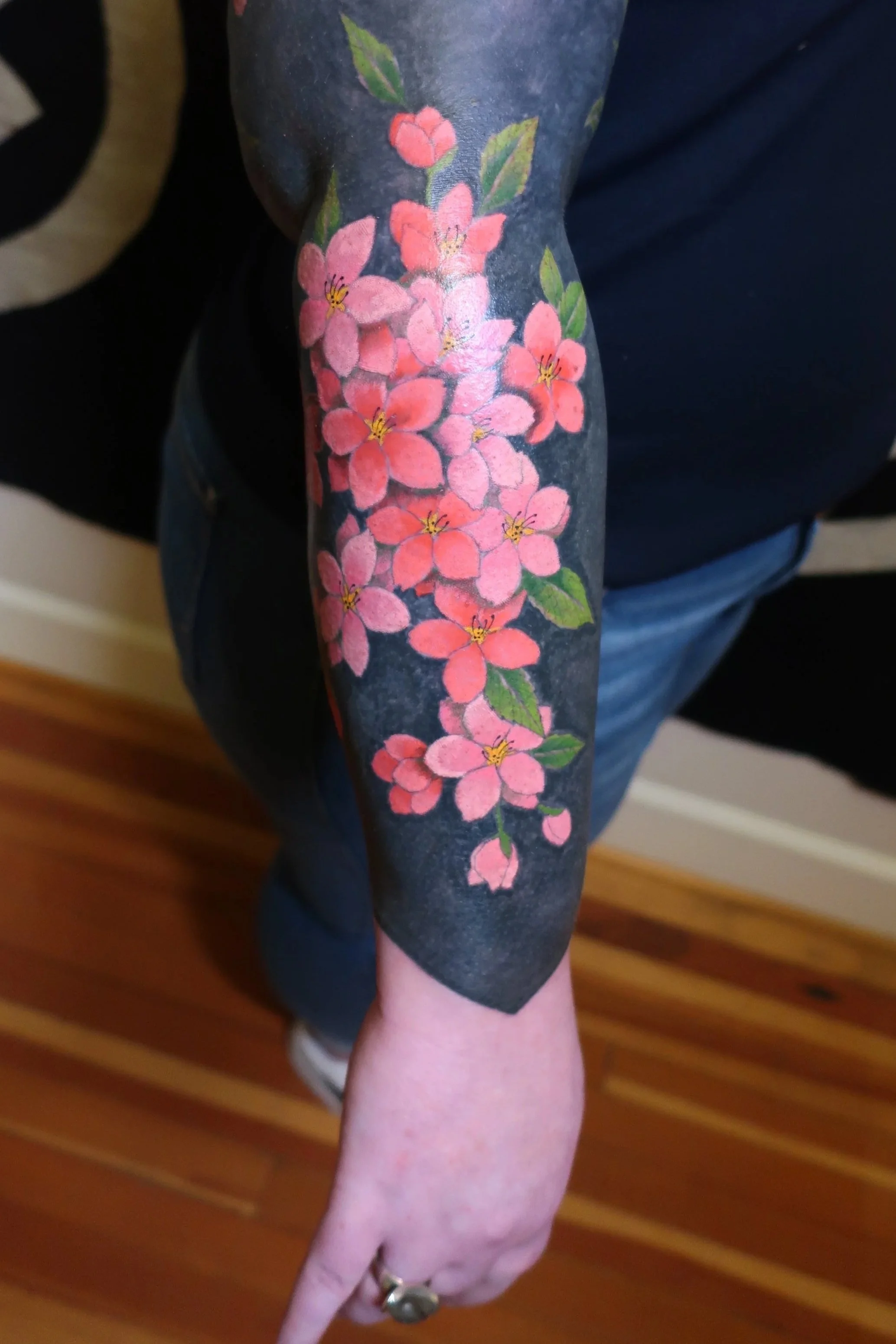
Blackwork can function as connective tissue within a sleeve. Saturated black backgrounds, heavy contrast, or blackout sections can unify disparate elements and create dramatic framing.
Used strategically, blackwork increases depth and visual clarity. It can transform an evolving sleeve into a cohesive composition by grounding lighter elements against a darker field.
Because black is permanent and dominant, this approach demands foresight. Once introduced, it becomes a defining structural choice.
Choosing the Right Sleeve Structure
There is no universally “correct” sleeve format — only the one that aligns with your aesthetic, comfort level, and long-term vision.
Some collectors want full saturation and traditional flow. Others prefer open skin and restraint. Some value gradual accumulation. Others want a cohesive masterwork designed from the outset.
The most successful sleeves are not built impulsively. They are structured with intention, respect for anatomy, and an understanding of how composition ages over time.
If you’re exploring tattoo sleeve options, begin by considering coverage, background, and structure — not just imagery. The architecture of the sleeve will ultimately determine how it feels on your body for decades to come.